|
|
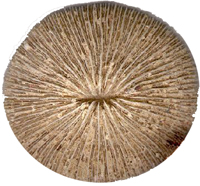
Coral"Intricately organised and immensely diverse, the living coral reef is the triumphant achievement of coral polyps..."(J.E.N. Veron, 1986) Corals are anthozoans, the largest class of organisms within the phylum Cnidaria. Comprising over 6,000 known species, anthozoans also include sea fans, sea pansies and anemones. Stony corals (scleractinians) make up the largest order of anthozoans, and are the group primarily responsible for laying the foundations of, and building up, reef structures. For the most part, scleractinians are colonial organisms composed of hundreds to hundreds of thousands of individuals, called polyps (Barnes, R.D., 1987; Lalli and Parsons, 1995).
Coral Polyps
All coral polyps share two basic structural features with other members of their phylum. The first is a gastrovascular cavity that opens at only one end. At the opening to this cavity, commonly called the mouth, food is consumed and some waste products are expelled. A second feature all corals possess is a circle of tentacles, extensions of the body wall that surround the mouth. Tentacles help the coral to capture and ingest plankton for food, clear away debris from the mouth, and act as the animal’s primary means of defense (Barnes, R.D., 1987; Levinton, 1995). While coral polyps have structurally simple body plans, they possess several distinctive cellular structures. One of these is called a cnidocyte—a type of cell unique to, and characteristic of, all cnidarians. Found throughout the tentacles and epidermis, cnidocytes contain organelles called cnidae, which include nematocysts, a type of stinging cell. Because nematocytes are capable of delivering powerful, often lethal toxins, they are essential to capturing prey, and facilitate coralline agonistic interactions (Barnes, R.D., 1987). Corals and Zooxanthellae
Coral Calcium
Coral calcium is calcium carbonate, which a chemical compound, with the chemical formula CaCO3. It is a common substance found as rock in all parts of the world, and is the main component of shells of marine organisms, snails, and eggshells. Calcium carbonate is the active ingredient in agricultural lime, and is usually the principal cause of hard water. It is commonly used medicinally as a calcium supplement or as an antacid.
Deep Water CoralsMany people are familiar with the coral reefs that thrive in shallow, well lighted, clear tropical waters where myriad colorful hard and soft corals provide habitat "infrastructure" for numerous invertebrates and fishes. The corals provide protection and cover, sources of nutrition, and sites for reproduction. Corals, however, also grow in the deep, cold sea. Although the existence of some of these deep-sea coral thickets has been known for several centuries, initially from pieces of broken corals brought up with fishing gear, scientists know little about their distribution, biology, behavior, and function as essential habitats for fishes and invertebrates. Read more about Deep Water Corals here |
|
|
Copyright © 2015 Coral Reef Info | Privacy Policy |
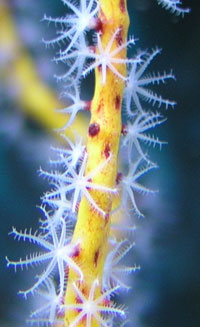 As members of the phylum Cnidaria, corals have only a limited degree of organ development. Each polyp consists of three basic tissue layers: an outer epidermis, an inner layer of cells lining the gastrovascular cavity which acts as an internal space for digestion, and a layer called the mesoglea in between (Barnes, R.D., 1987).
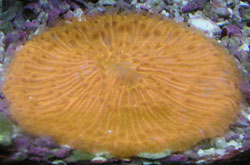 Most tropical corals, like other cnidarians, contain a symbiotic algae called zooxanthellae, within their gastrodermal cells. The coral provides the algae with a protected environment and the compounds necessary for photosynthesis. These include carbon dioxide, produced by coral respiration, and inorganic nutrients such as nitrates, and phosphates, which are metabolic waste products of the coral. In return, the algae produce oxygen and help the coral to remove wastes. Most importantly, they supply the coral with organic products of photosynthesis. These compounds, including glucose, glycerol, and amino acids, are utilized by the coral as building blocks in the manufacture of proteins, fats, and carbohydrates, as well as the synthesis of calcium carbonate (CaCO3). The mutual exchange of algal photosynthates and cnidarian metabolites is the key to the prodigious biological productivity and limestone-secreting capacity of reef building corals (Barnes, R.D., 1987; Barnes, R.S.K. and Hughes, 1999; Lalli and Parsons, 1995; Levinton, 1995; Sumich, 1996).